Adam Smith lacked the language of sustainability, natural capital or intergenerational justice. But 250 years after the publication of his founding text of economics, a central insight reflects powerfully on current concerns: ultimately, the wealth of a nation is what it leaves behind for tomorrow.
The good thing about Adam Smith is that there is always an anniversary to mark. Three years ago, 2023 was the tercentenary of his birth; this year marks the 250th anniversary of the publication of The Wealth of Nations; in 2028, we’ll celebrate when he moved into Panmure House; and then by 2029, we’ll be back to celebrating the prescience of The Theory of Moral Sentiments 270 years on.
In June 2023, I organised a session on Adam Smith and the environment at one of the events held at the University of Glasgow and at Panmure House in Edinburgh (his last place of residence). I wrote up my notes from that event for the Economics Observatory: Where is the wealth of nations in the 21st century?
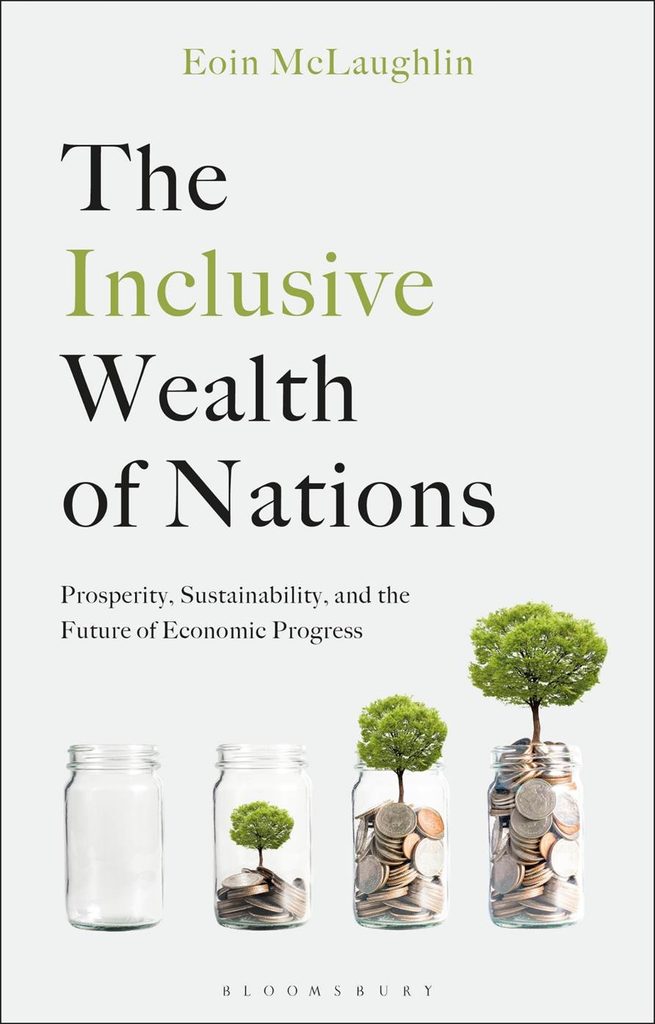
Subsequently inspired by my time as a Panmure House fellow, I have written The Inclusive Wealth of Nations: Prosperity, sustainability and the future of economic progress to coincide with the 250th anniversary of the publication of The Wealth of Nations.
The main argument of my book is that we should return to focusing on the wealth of nations and not just the income (GDP) of nations. I advocate a more complete balance sheet account that includes natural capital as a way to complement GDP.
Fortuitously, this fits with the current ‘beyond GDP’ movement: for example, the United Nations high-level expert group on Beyond GDP, a project including Nobel laureate Joseph Stiglitz, published its report in May of this year. It also aligns with the 2025 revision to the UN system of national accounts, which includes discussion of comprehensive wealth accounts.
Smith beyond the invisible hand
To give the work its full title, An Inquiry into the Nature and Causes of the Wealth of Nations – published on 9 March 1776 – is considered a classic in academic and financial circuits. But as the economist William Barber wryly surmised, it ‘has suffered the fate accorded to most classics: it is more talked about than read.’
I recently wrote a summary of my book in the scientific journal Nature (McLaughlin 2026). After this, I received an email from a professor in an illustrious university that questioned why I would evoke Adam Smith to talk about sustainability because it ignored the invisible hand and laissez-faire. In other words, they implied, Smith is why the world has so many problems today.
A short summary of a very lengthy response: I think this reflects a fundamental misunderstanding of what Smith thought and wrote. Take a typical introductory economics textbook: Adam Smith is only given a passing reference. There is a small text box introducing The Wealth of Nations, it quotes an iconic passage about how self-interest drives market behaviour, and it emphasises the importance of the (rather than ‘an’) invisible hand.
This is a very superficial summary of a very complex book (rather, a book of books), one that Smith continually revised over his lifetime. Ironically, the invisible hand that is so often attributed to Smith is only mentioned once in The Wealth of Nations, although so much has been built around this powerful image.
Smith was first and foremost a moral philosopher, and The Wealth of Nations was part of his broader intellectual project. What is seldom mentioned is that his use of an invisible hand was first associated with Smith from the pages of The Theory of Moral Sentiments; yet modern economics has largely distanced itself from this text and its original context.
What Smith meant by an invisible hand has of course been much debated, with the current view being that he did not intend it to be a wide overarching mechanism regulating economies and societies (Persky, 1989; Rothschild, 1994; Grampp, 2000).
The inclusive wealth of nations
So, with the 250th anniversary of The Wealth of Nations, I wanted to go back to Smith and ask a simple question: what does the wealth of a nation actually mean in the 21st century?
I drew inspiration from one of the pioneers of modern sustainability science Kenneth Boulding (1971), who argued that: ‘Works like The Wealth of Nations, therefore, are inevitably part of an extended present, which shows no signs of coming to an end, in the sense that one can still go back to Adam Smith even after many rereadings and find insights which one has never noticed before and which may have a marked impact on one’s own thought.’
I reread Smith in relation to the work I did on sustainable development, which thinks in terms of inclusive wealth (also referred to as comprehensive wealth) – for example, see the book length treatments by Dasgupta (2001) and Weitzman (2003).
In The Wealth of Nations, Smith defined a nation’s wealth not in terms of money but as capital – machines, buildings, land and the ‘acquired and useful abilities of all inhabitants and members of the society’. Economists still follow this approach.
In an earlier article for the Economics Observatory, I argue that Smith’s writing aligned with current thinking about sustainability, namely what the World Bank had published in its Changing Wealth of Nations (CWON) project – a series that originally started in the early 2000s with the landmark: Where is the wealth of nations report published in 2006.
In this work, the World Bank put more emphasis on wealth as opposed to income (or GDP) to measure the wealth of nations. It measured what it called comprehensive wealth, a measure of produced capital, natural capital and human capital. Basically, the reports show that lower-income countries tend to have a higher share of their wealth in the form of natural capital.
Smith thought about economic progress as the transformation of the different forms of wealth. He saw how we take natural capital (both finite and renewable) to make produced capital (machines) and ultimately human capital, which is the basis of economic growth. It is the maintenance of the capital stock that generates future income.
Smith was clear on this: ‘it is this stock which feeds, cloaths, and lodges the people.’ He argued that a nation becomes wealthy not by consuming its inheritance but by preserving and enlarging the stocks of capital on which future prosperity depends. For example, investment in roads, bridges and other infrastructure increases the capacity to produce goods and services available to people today and to those who inherit it, provided it is maintained.
Therefore, existing capital stock is the fruit of the ‘frugality’ of our forebears. And decisions about whether to maintain or run down capital stocks affect not only prosperity today but also the opportunities available to future generations.
Justice and the impartial spectator
Where my book deviates from the earlier Economics Observatory pieces is the explicit inclusion of The Theory of Moral Sentiments as a moral foundation for the inclusive wealth framework. The question of sustainable development is inherently an ethical question, and Adam Smith was first and foremost a virtue ethicist (McCloskey 2008).
Smith also outlined how enabling justice is an essential role of the state – this is clearly stated in book V of The Wealth of Nations and it appears throughout. But it was in The Theory of Moral Sentiments (1759) that Smith set out his views on justice more fully. One aspect that has been underappreciated is how an individual’s actions affect others.
Smith could not accept that the actions of one person, through ignorance or otherwise, should be allowed to hold back another. ‘Though his own happiness may be of more importance to him than that of all the world besides’, he wrote, ‘to every other person it is of no more consequence than that of any other man.’
He outlined a framework for judging someone’s actions on the basis of the perception of an ‘impartial spectator’, an imagined, well-informed observer who assesses whether the actions are worthy of praise or blame. Crucially, to ‘disturb the happiness’ of others because it stands in the way of our own would be intolerable to the impartial spectator.
The impartial spectator can be imagined as a future generation judging whether a previous one has acted as a responsible custodian of the wealth it inherited. This is how I framed the impartial spectator.
Two centuries later, philosophers and economists formalised this problem as one of intergenerational justice. John Rawls (1971, 1999) called it ‘just savings’, which he defined as:
‘Each generation must not only preserve the gains of culture and civilization, and maintain intact those just institutions that have been established, but it must also put aside in each period of time a suitable amount of real capital accumulation. This saving may take various forms from net investment in machinery and other means of production to investment in learning and education.’
Economists including Kenneth Arrow (1973), Robert Solow (1974), John Hartwick (1977), Partha Dasgupta (2001) and Amartya Sen (2009) asked what each generation must leave behind to ensure that future generations retain the opportunity to flourish. In that sense, we've spent decades formalising a problem that Smith had already identified.
For economic growth to be more equitable across space and time, governments and societies need to make hard choices. Placing too little weight on future wellbeing can leave future generations worse off – for example, by depleting natural resources without investing the proceeds or by allowing carbon emissions to impose large future costs. But placing too much weight on the future can also be inequitable, if the present population is required to sacrifice consumption and wellbeing to leave an ever-larger stock of wealth to generations that might already be richer.
Measuring just savings
The next question for economists is how to measure just savings. These are not captured by GDP, which measures only a nation’s level of production of goods and services. Just savings can be tracked through inclusive wealth, a measure that focuses on three different forms of capital – produced (manufactured), natural (environmental) and human (skills and knowledge). By contrast, GDP is generated by combining these capitals, along with knowledge, while institutions, such as legal systems and political organisations, shape how effectively resources are allocated.
The difference between income and wealth is still not widely recognised today. Income is a flow that is measured over a discrete period of time (for example, quarterly or yearly), while wealth is an accumulated stock. For example, the annual salary (income) of a worker may be high, but their net worth (wealth) may not be due to various other factors, including student or personal loans, spending habits and so on.
The same principle applies to companies; they may report high revenue, but their balance sheet might not be as healthy. The analogy extends to nations as well, they could have a high national income (GDP), but their national wealth might not be in rude health. Having GDP growth when we run down our environment (our natural capital) is like heating a house by ripping up the floorboards: it undermines the foundations of our wealth.
In the context of planetary boundaries and global catastrophic risks, inclusive wealth is a better measure of economic health than is conventional GDP, because it reveals what is happening to the underlying asset base. It tells us whether today’s growth is being achieved by building wealth or by running down the natural, human and produced capital on which future prosperity depends.
If the current generation runs down our natural capital, then future generations will not have access to the same capabilities.
Does this matter? In my view, yes. Inclusive wealth and GDP can tell different stories. For example, according to the World Bank’s database, Nigeria experienced a GDP per capita growth of 2.3% between 1995 and 2018, but its inclusive wealth per capita declined by 0.4% over the same period. This difference might reflect how exploitation of natural assets, such as oil, were not converted into capital assets such as infrastructure or social benefits, including education and health.
In my Economics Observatory piece, I referenced the 2021 CWON report, but since then there was a 2024 update that changed the underlying methodology.
I should also note that the World Bank is not the only game in town. The United Nations Environment Programme (UNEP) also produces its own series on inclusive wealth (see its latest 2023 Inclusive Wealth report). The World Bank and the UNEP reports never seem to cross-reference each other, so the assumption had been that they were telling a similar story. Not quite. In a paper with colleagues, we find substantial discrepancies between the estimates of the World Bank and the UNEP (McLaughlin et al, 2024).
The most striking discrepancies were in how natural capital and human capital were estimated. I’ve shown the assets included in natural capital in Table 1. These were remarkably similar yet the two reports came to different conclusions because of assumptions used when valuing these assets.
Table 1: Assets included in natural capital
| UNEP (2018) | World Bank (2021) | |
| Non-renewable natural capital | ||
| Fossil fuels | Oil Natural gas Coal | |
| Minerals | Bauxite Copper Gold Iron ore Lead Nickel Phosphate Silver Tin Zinc | |
| Renewable natural capital | ||
| Agricultural land | Cropland | |
| Pasture land | ||
| Marine fisheries | ||
| Mangroves | ||
| Forest resources | Timber | |
| Non-timber forest products | ||
| Ecosystem services | ||
| Protected areas | Protected areas | |
Inclusive wealth and the UK economy
My book also looks at the history of measurement of natural capital and inclusive wealth. I argue that there are similarities in the development of inclusive wealth accounting and the birth of national accounting, but that the main issue is that there are no agreed international standards, which undermines the application of the concepts.
I apply the conventional concepts to Britain’s economic history, drawing heavily on work by Sidney Pollard (1982) and Nick Crafts (2018) on British economic history and bringing their analysis up to the present day. Basically, they both place emphasis on Britain’s relative decline. Pollard was writing at the height of the ‘British disease’ and was trying to push for a change of tack by policy-makers. Crafts, on the other hand, had argued that Britain had bounced back after the decline but was once again in the doldrums after the global financial crisis of 2007-09.
I then apply the concept of inclusive wealth to Britain’s economic history to see if this could offer some insight into Britain’s relative decline. I argue that it does. One aspect that distinguishes the inclusive wealth approach from the conventional GDP-focused narrative is the overlooking of energy. While Pollard was writing close to the North Sea coming on stream, Crafts made no mention of it. I highlight the difference between coal and oil in British economic history. I draw on Solow (1986)’s assessment that the UK had wasted its oil boom, or rather that the so-called Dutch disease should probably be called the British disease. Using World Bank data, I show how the UK had lower rates of adjusted saving than other OECD countries.
I end the book by comparing against an alternative. Adam Smith greatly admired the French physiocratic approach to political economy, one that saw agriculture as the main source of the wealth of nations. In a complementary critique, he praised, ‘this system . . . with all its imperfections is, perhaps, the nearest approximation to the truth that has yet been published upon the subject of political economy, and is upon that account well worth the consideration of every man who wishes to examine with attention the principles of that very important science.’
I put Kate Raworth’s (2017) doughnut and degrowth ideas alongside planetary boundaries as an alternative way of framing the problem. I argue that they come up short because of the assumptions that underpin their approach. This was the most fun to write, for example, how has China been deemed to be more sustainable than the United States according to researchers attempting to apply planetary boundaries to nation states (O’Neill et al, 2018)? Well, they did some creative accounting using population as weights so thresholds/boundaries were higher for China by the fact it has a larger population, and hence it tends to be within its boundaries despite the fact that it produces much more environmental bads than the United States in the 21st century.
I end the chapter talking about two important issues: substitutability and technology. Substitutability is an important assumption in the inclusive wealth approach as it implies perfect substitution of different forms of capital – that is, that a reduction in $1 of oil reserves can be converted into a $1 of infrastructure. But I show important caveats and limits to substitution.
As for technology, it tends to be treated as a panacea in work such as Aghion and Howitt (1997, 2009) or Weitzman (1999). But I show how technology can be a double-edged sword. The pesticide DDT is a good example: it was highly effective (too effective as William Vogt, 1948, and Rachel Carson, 1962, showed, in that it was indiscriminate in what it killed), but then it ended up entering the human food chain.
Summary
Policy-makers and economists must remember that these measurements are only a means to an end. The real question is what kind of society we hope to leave behind, which is fundamentally a moral issue.
As Smith wrote in The Wealth of Nations: ‘No society can surely be flourishing and happy, of which the far greater part of the members are poor and miserable.’
A truly flourishing society is one that not only lifts people out of poverty today but also passes on the capital – produced, human and natural – that allows future generations to flourish, too.
Smith did not have the language of sustainability, natural capital or intergenerational justice. But 250 years after The Wealth of Nations, perhaps we have made his question too narrow. We ask how much an economy produces but we should also ask whether it is becoming wealthier.
Because ultimately, the wealth of a nation is not what it produces today, but what it leaves behind for tomorrow.
Where can I find out more?
- The Inclusive Wealth of Nations: Prosperity, sustainability and the future of economic progress: Book by Eoin McLaughlin, published by Bloomsbury.
- The economics of biodiversity: The Dasgupta Review, published in 2021.
- Historical wealth accounts for Britain: progress and puzzles in measuring the sustainability of economic growth: Study by Eoin McLaughlin, Nick Hanley, et al published in the Oxford Review of Economic Policy.
- Genuine savings and sustainability: Study by Nicholas David Hanley, Louis Paul Dupuy and Eoin McLaughlin published in the Journal of Economic Surveys.
- Challenges of wealth-based sustainability metrics: A critical appraisal: Study by Eoin McLaughlin, Cristian Ducoing and Nick Hanley published in Ecological Economics.
- Where is the wealth of nations? World Bank report from 2006.
- The changing wealth of nations: Measuring sustainable development in the new millennium: World Bank report from 2011.
- The changing wealth of nations: Building a sustainable future: World Bank report from 2018.
- The changing wealth of nations 2021: Managing assets for the future: World Bank report.
Who are experts on this question?
- Matthew Agarwala
- Partha Dasgupta
- Cristian Ducoing
- Susana Ferreira
- Nick Hanley
- Eoin McLaughlin
- Kirsten Oleson
- Les Oxley
- Mar Rubio
- Diane Coyle